24 Nisan 2012 Salı

Bringing self-driving cars to NASCAR

Ever since mankind could go fast, we have longed to go faster. And ever since we’ve done work, we have longed to have someone else, or something else, do that work for us. You might already be familiar with our self-driving car project. We’ve spent years working on a tough engineering problem—how to create a hardware and software system capable of gathering and interpreting massive amounts of real-time data and acting on that knowledge swiftly and surely enough to navigate innumerable varieties of crowded thoroughfares without ever once (among other human frailties) exploding in a fit of road rage at the guy who just cut hard left across your lane without even bothering to flash his blinker. 

Well, our autonomous cars have now been test-driven (or rather, test-ridden) for more than 200,000 miles without a single machine-caused mishap. And today we're moving the project one great leap forward with Google Racing, a groundbreaking partnership with NASCAR to help self-driving vehicles compete in the world of stock car racing. We think the most important thing computers can do in the next decade is to drive cars—and that the most important thing Google Racing can do in the next decade is drive them, if possible, more quickly than anyone else. Or anything else. 

Find more photos on our Google+ page

The program remains in its infancy; we’ll surely face numerous testing and competitive hurdles before our first car peels out into a NASCAR race. But I couldn’t be more excited about the possibilities. NASCAR’s ambitious technology investments—from driver safety to green initiatives—and the sport’s spirit of challenge, effort and execution all beautifully embody our most deeply held values as a company. Having skidded around a parking lot last week myself, I’m pretty sure that none of those test miles were as hard as it will be for one of our cars to hold its own in a field of 43 jacked-up, 800-horsepower beasts screaming down a straightaway within inches of each other at upwards of 200 miles per hour. I can't imagine a more exciting challenge for our team than to race our autonomous vehicles against their carbon-based competitors. 

Find more photos on our Google+ page

Larry and I have always believed in tackling big problems that matter, and we’re surer than ever that self-driving cars are one of them, capable of changing the world in all kinds of truly important ways, like reducing traffic and accidents by driving more efficiently, making correct split-second decisions and never shifting their focus off the road to check a map, text a friend, apply rear-view mirror mascara or dip a piece of tekka maki into a lid of soy sauce jostling over on the passenger seat. I hope that today’s announcement of Google Racing will mark another step along this path, and spur innovations that improve the daily lives of people all over the world. Or at the very least offer us a few cool new thrills on hot weekend afternoons. 

Update Apr 1, 10:05 a.m.: As you probably guessed—no, Google Racing isn’t real. We were really happy to work with NASCAR on this April Fools' joke. The technological advancements this sport has made in the last decade are impressive and while we won’t be providing self-driving cars to compete in the races, we look forward to working together with NASCAR in the future on projects like their YouTube channel. What better way to drive change? 

Google+ Hangout with the UN Secretary-General

We’re passionate about changing the world. But there’s another organization that’s equally passionate—and has been doing it a lot longer. For more than 60 years, the United Nations has worked to advance a global agenda on ending war and poverty, promoting human rights, protecting the environment and dealing with humanitarian crises—critical issues that will determine the quality of life for future generations to come.

So we’re delighted that on Tuesday, April 10, some of the voices of the next generation will have the chance to participate in an exclusive global conversation with UN Secretary-General Ban Ki-moon via a Google+ Hangout from the United Nations headquarters in New York. Six young people, selected in consultation with partners in civil society, academia and United Nations offices in the field, will join from the United States, Europe, Asia, Africa, the Middle East and Latin America, and have the opportunity to ask questions on the issues that matter to them.

The Google+ Hangout with the UN Secretary-General will be streamed live at 3:30pm ET on April 10 at youtube.com/unitednations. David C. Drummond, Google’s SVP of Corporate Development and Chief Legal Officer, will moderate.


Technology has given us the chance to advance the important work of the UN, while ensuring that global politics is made more accountable to citizens. We’re thrilled that Google can help play a small part in this.

Toward a simpler, more beautiful Google

Update 5:49pm: for our international readers, this post is also available in French,GermanItalianJapanese and Spanish (Latin AmericaSpain). - Ed.

More than 170 million people have upgraded to Google+, enjoying new ways to share in Search, Gmail, YouTube and lots of other places. It's still early days, and there’s plenty left to do, but we're more excited than ever to build a seamless social experience, all across Google.

A critical piece of this social layer is a design that grows alongside our aspirations. So today we’re introducing a more functional and flexible version of Google+. We think you’ll find it easier to use and nicer to look at, but most importantly, it accelerates our efforts to create a simpler, more beautiful Google.


Navigation you can make your own
One of the first things you’ll notice is a new way to get around the stream. Instead of static icons at the top, there’s a dynamic ribbon of applications on the left. This approach comes with lots of perks, but some of our favorites include:
  • You can drag apps up or down to create the order you want
  • You can hover over certain apps to reveal a set of quick actions
  • You can show or hide apps by moving them in and out of “More”


Taken together, these powers make it easier to access your favorites, and to adjust your preferences over time. We've also built the ribbon with the future in mind, giving us an obvious (and clutter-free) space for The Next Big Feature, and The Feature After That. So stay tuned.

Conversations you’ll really care about
Once you’ve upgraded to Google+, it’s easy to share with your circles from just about anywhere. We’re dreaming bigger, though. We're aiming for an experience that fuses utility with beauty—one that inspires you to connect with others, and cherish the conversations that unfold. Today’s update is an important step in this direction, including:
  • Full bleed photos and videos that'll make you really proud to post
  • A stream of conversation "cards" that make it easier to scan and join discussions
  • An activity drawer that highlights the community around your content


Simply put, we're hoping to make sharing more awesome by making it more evocative. You know that feeling you get when a piece of art takes your breath away, or when a friend stops by with unexpected gifts? We want sharing to feel like that, every single time.

A new home for hanging out
Google+ Hangouts uses live video to bring people together, and the results range from heartwarming to breathtaking to music-making. Today we're adding a dedicated Hangouts page that creates even more opportunities to connect in person, including:
  • An always-updated list of invitations from the people in your circles
  • Quick access to every public and On Air hangout, for those times when you want to meet someone new, or watch a live broadcast
  • A rotating billboard of popular hangouts, pro tips and other items you don’t want to miss


By highlighting all the hangouts you can join, all over the world, it’s now easier to spend time together—even be there for each other. And with efforts like hangout apps already underway, you can expect more hangouts in more places in the future.

Getting there from here
Today's Google+ update extends beyond navigation, the stream and hangouts. For instance: there's a new Explore page that shows what's interesting and trending across the network. And a new profile with much bigger photos. And a new chat list that puts your friends front and center. And a whole lot more.

We're rolling out all of these improvements over the next few days, so please check back if you don't see them yet. In the meantime, you can visit this overview to learn more.


By focusing on you, the people you care about, and the stuff you’re into, we’re going to continue upgrading all the features you already know and love—from Search and Maps to Gmail and YouTube. With today’s foundational changes we can move even faster—toward a simpler, more beautiful Google.

Celebrating the Google Photography Prize Finalists

Back in November we announced the Google Photography Prize 2012, a competition offering student photographers a chance to share their best photographs with the world. 

Groundbreaking photographer Ansel Adams once said, “There are no rules for good photographs, there are only good photographs,” so we left the themes for submission suitably broad, with 10 categories that combined classic photography genres with online photography trends including “Night,” “Travel,” “Sound/Silence” and “Me.” 

We were thrilled by the interest in the contest: nearly 20,000 students from 146 countries took part, of which 100 were shortlisted. You can see these in the gallery on our website.

Our judging panel of seven leading photography experts chose the 10 finalists whose work will be shown in our exhibition in the Saatchi Gallery. Today we’re announcing the finalists: Collin Avery (U.S.), Viktor Johansson (Sweden), Kyrre Lien (Norway),Alexandra Claudia Manta (Romania), Balázs Maté (Hungary), Adi Sason (Israel),Oliver Seary (UK), Dana Stirling (Israel), Sasha Tamarin (Israel), Zhao Yi (China). Here are examples of the finalists' work—you can see their full albums on their Google+ profiles.


If you’re in London, come to the Saatchi Gallery to see the work of our finalists displayed alongside a new exhibition of international photography, Out of Focus, starting April 25. The overall winner of the Google Photography Prize will be announced on April 24, and will go on a once-in-a-lifetime trip to a location of their choice with a professional photographer as their mentor.

We hope you enjoy these fantastic photos as much as we did.

Google World Inside view on ads review


This is the first in a series of posts that will provide greater transparency about how we make our ads safer by detecting and removing scam ads. -Ed.
A few weeks ago, we posted here about our efforts in fighting bad ads, and we shared a video with the basics of how we do it. Today I wanted to delve a little deeper and give some insight into the systems we use to help prevent bad ads from showing. Ourads policies are designed with safety and trust in mind—we don’t allow ads formalicious downloadscounterfeit goods, or ads with unclear billing practices, to name a few examples. In order to help prevent these kinds of ads from showing, we use a combination of automated systems and human input to review the billions of ads submitted to Google each year. I’m one of many engineers whose job is to help make sure that Google doesn’t show bad ads to users.
We’ve designed our approach based on a three-pronged strategy, each focused on a different dimension of the problem: ads, sites, and advertiser accounts. These systems are complementary, sharing signals among each other so that we can comprehensively attack bad ads.
For example, in the case of a site that is selling counterfeit goods, this three-pronged approach aims to look for patterns that would flag such a site and help prevent ads from showing. Ad review notices patterns in the ads and keywords selected by the advertiser. Site review analyzes the entire site to determine if it is selling counterfeit goods. Account review aims to determine if a new advertiser is truly new, or is simply a repeat offender trying to abuse Google’s advertising system. Here’s more detail on how we review each of these three components.
Ad Review
An ad is the snippet of information presented to a user, along with a link to a specific webpage, or landing page. The ads review system inspects individual ads and landing pages, and is probably the system most familiar to advertisers. When an advertiser submits an ad, our system immediately performs a preliminary examination. If there’s nothing in the ad that flags a need for further review, we tell the advertiser the ad is “Eligible” and show the ad only on google.com to users who have SafeSearch turned off. If the ad is flagged for further review, in most cases we refer to the ad as “Under Review” and don’t show the ad at all. From there, the ad enters our automated pipeline, where we employ machine learning models, a rules engine and landing page analysis to perform a more extensive examination. If our automated system determines an outcome with a high degree of confidence, we will either approve the ad to run on Google and all of our partners (“Approved”), approve the ad to show for appropriate users in specific locations (“Approved - Limited”) or reject the ad (“Disapproved”). If our automated system isn’t able to determine the outcome, we send the ad to a real person to make a final decision.
Site Review
site has many different pages, each of which could be pointed to by different ads, often known as a domain. Our site review system identifies policy issues which apply to the whole site. It aggregates sites across all ads from all advertisers and regularly crawls them, building a repository of information that’s constantly improving as new scams and new sites are examined. We store the content of advertised sites and use both machine learning models and a rules engine to analyze the sites. The magic of the site review system is it understands the structure of language on webpages in order to classify the content of sites. Site review will determine whether or not an entire site should be disabled, which would prevent any ads leading to that site showing from any account. When the automated system isn’t able to determine the outcome with a high degree of confidence, we send it to a real person to make a decision. When a site is disabled, we tell the advertiser that it’s in violation of “Site Policy.”
Account Review
An account is one particular advertiser’s collection of ads, plus the advertiser’s selections for targeting and bidding on those ads. An account may have many ads which may point to several different sites, for example. The account review system constantly evaluates individual advertiser accounts to determine if the whole account should be inspected and shut down for policy violations. This system “listens” to a variety of signals, such as ads and keywords submitted by the advertiser, budget changes, the advertiser’s address and phone number, the advertiser’s IP address, disabled sites connected to this account, and disapproved ads. The system constantly re-evaluates all accounts, incorporating new data. For example, if an advertiser logs in from a new IP address, the account is re-evaluated to determine if that new signal suggests we should take a closer look at the content of the advertiser’s account. If the account review system determines that there is something suspect about a particular account with a high degree of confidence, it automatically suspends the account. If the system isn’t sure, it stops the account from showing any ads at all and asks a real person to decide if the account should be suspended.
Even with all these systems and people working to stop bad ads, there still can be times when an ad slips through that we don’t want. There are many malicious players who are very persistent—they seek to abuse Google’s advertising system in order to take advantage of our users. When we shut down a thousand accounts, they create two thousand more using different patterns. It’s a never-ending game of cat and mouse.
We’ve put a great deal of effort and expense into building these systems because Google’s long-term success is based on the trust of people who use our products. I’ve focused my time and energy in this area for many years. I find it inspiring to fight the good fight, to focus on the user, and do everything we can to help prevent bad ads from running. I’ll continue to post here from time to time with additional thoughts and greater information about how we make ads safer by detecting and removing scam ads.

Exploring Jerusalem’s Old City streets with Street View

Every year, 3.5 million people come to Israel to visit ancient sites that are holy to billions of people, to walk among the unique stone of Jerusalem, or to relax on the beaches of the Mediterranean. 


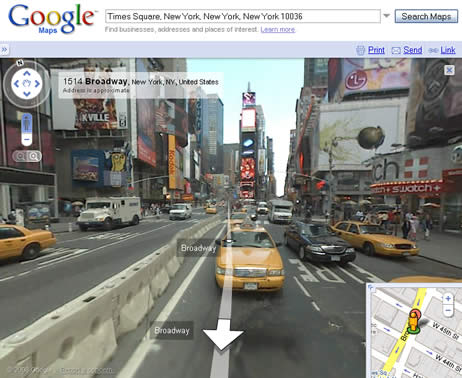
To help you explore Israel’s history and present, we’ve launched imagery of Jerusalem, Tel Aviv-Jaffa and Haifa on Street View. You can explore the narrow streets of Jerusalem’s Old City and each of its four quarters, walk along the Via Dolorosa and see the Church of the Holy Sepulchre, visit the Western Wall and theMount of Olives. You can stop by the Biblical Zoo, then visit the Israel Museum and the Yad Vashem Holocaust museum—and explore more with the Art Project and the Yad Vashem photo archive. Or you can stroll through Tel Aviv’s bohemian Neve Tzedek neighborhood and the ancient port of Jaffa, and take a virtual trip to some of Tel Aviv’s scenic beaches or to Haifa’s Baha’i Gardens


We hope you’ll use Street View to discover, explore and more. Some are already using the new imagery to help others—for example, Access Israel, an organization working to make Israel more accessible for people with disabilities, has embedded Street View in its accessibility mapping project of Israeli cities (note: in Hebrew). 

We’ll be adding more Street View coverage of sites and streets in the coming months, and are hoping to bring Street View to more places around the region soon.

15 Nisan 2012 Pazar

Google World explain to people how to use google for perfectly


googleworld-tr blogspot | izlesene.com

Google world-tr still going on to explain eveything about google. if you dont know how to use google perfectly you should watch this video.

9 Nisan 2012 Pazartesi

More Options for Google+ Badges


UPDATE (2/2/12): The new Google+ badge is now out of preview and available to all users on all sites.

When we launched Google+ pages in November, we also released Google+ badges to promote your Google+ presence right on your site. Starting today in developer preview (and soon available to all your users), we're adding more options for integrating the Google+ badge into your website. You can configure a badge with a width that fits your site design and choose a version that works better on darker sites. You'll also see that Google+ badges now include the unified +1 and circle count that we added to Pages last month.

If you’re still considering whether to add a Google+ badge on your website, consider this: We recently looked at top sites using the badge and found that, on average, the badge accounted for an additional 38% of followers. When you add the badge visitors to your website can discover your Google+ page and connect in a variety of ways: they can follow your Google+ page, +1 your site, share your site with their circles, see which of their friends have +1’d your site, and click through to visit your Google+ page.

The Google+ Badge makes it easy for your fans to find and follow you on Google+. With these additional options, we hope it's even easier to create a badge that fits your website. 

Follow the conversation on Google+.

Improving Google+ Plugins Across the Web


Over a million websites use Google+ plugins -- like the +1 button and the badge for Pages -- to help visitors connect with their brand and share their content with others. Today we're excited to announce a number of improvements to these plugins that make sharing and connecting even easier.

Easier to share from the +1 button 
Starting today, it’ll be a little easier to share right from the +1 buttons all across the web. Now, after you +1 something, the share box will pop open right away, without an extra click. Add a comment if you want, choose the people you want to share with, and you’re done.

Easier to follow brands and businesses 
When you add Google+ pages to your circles, it's typically to follow their news and updates. That's why we're updating badges for Google+ pages to read "Follow." With just one click, this button adds a business or brand to your "Following" circle, and if you want to customize which circle they're in, you can do that too.

If you're one of the many businesses and brands with a Google+ page, we've also put together a handy style guide (pdf) which includes recommended language and images for promoting your page.

Adding a badge for people, not just pages 
We heard you! Now anyone (including Britney Spears!) can add a personal Google+ badge to their web pages, and let visitors add them to circles quickly and easily.
We’ve got lots more planned for the Google+ plugins, stay tuned!

#googleplusupdate 

A New Look for the +1 Button

UPDATE (3/14/12): Today, we released the new +1 button from preview and it’s now rolling out to all users. You may also notice the numbers in your +1 buttons increase, as we update our plugins to better reflect social activity around your content. Our Webmaster Tools Help Center article has more details on this update.  Join the conversation on Google+.


Following in the footsteps of our new red and white Google+ icon, the +1 button is sporting a fresh coat of paint. Starting today, this update will be visible first to our Google+ Platform Preview Groupand shortly thereafter we’ll roll it out to the public.

Check out the new pixels:


Before you’ve +1’d 


After you’ve +1’d 


The +1 buttons you’ve already installed will automatically update; there’s nothing you need to do. Stop by the updated configuration tool to see how these changes look across all the various sizes and shapes of the +1 button.

We’ll update this post when these changes graduate to the public.

Follow the conversation on Google+

Moving the Google+ Hangouts API Out of Preview


One of the most important ways we connect with others is in person. That's why we're so excited about Google+ Hangouts, and why we launched a preview of the Hangouts API a few months ago. Today we're moving this API out of preview, and enabling developers to launch and share their hangout apps with the entire Google+ community!

Hangout apps are regular web apps, running in a big window inside the Hangout UI. In addition to using shared-state APIs to give users real-time interactivity, you also have access to built-in Hangout features, such as:
  • Initiate a group video chat with up to 10 people 
  • Control hangout microphones, cameras, speakers and volume levels 
  • Add sound effects and attach image overlays to faces 
  • Set UI elements such as the video feed, chat pane, and notifications
It’s easy to get started: read the documentationbuild and publish your app, and then let users know. You can easily get the word out in one of two ways: 1) post a link to it on Google+, and/or 2) add the new hangout button to your website. In either case, anyone who clicks will start a new hangout with your app running inside. It then appears in the “Recent” apps pane for future hangouts.

To get the ball rolling, we're introducing a new "Apps" pane in Google+ Hangouts, as well as some featured applications, including Aces HangoutCacooScoot & DoodleSlideshareClubhouse Challenge by Bravo, and Google Effects. We’re looking forward to seeing what you can dream up in the weeks and months ahead.

Follow the conversation on Google+, and happy building!

Eadweard Muybridge on Google Screen

Eadweard J. Muybridge (play /ˌɛdwərd ˈmbrɪ/; 9 April 1830 – 8 May 1904) was an English photographer of Dutch ancestry who spent much of his life in the United States. He is known for his pioneering work on animal locomotion which used multiple cameras to capture motion, and his zoopraxiscope, a device for projecting motion pictures that pre-dated the flexible perforated film strip.[1]


Names

Born Edward James Muggeridge, he changed his name several times early in his US career. First he changed his forenames to the Spanish equivalent Eduardo Santiago, perhaps because of the Spanish influence on Californian place names. His surname appears at times as Muggridge and Muygridge (possibly due to misspellings), and Muybridge from the 1860s.
In the 1870s he changed his first name again to Eadweard, to match the spelling of King Edward shown on the plinth of the Kingston coronation stone, which was re-erected in Kingston in 1850. His name remained Eadweard Muybridge for the rest of his career.[2] However, his gravestone bears a further variant, Eadweard Maybridge.
He used the pseudonym Helios (Greek god of the sun) on many of his photographs, and also as the name of his studio and his son's middle name.[3]

Early life and career

Muybridge was born at Kingston upon Thames, England on 9 April 1830. He emigrated to the US, arriving in San Francisco in 1855, where he started a career as a publisher's agent and bookseller. He left San Francisco at the end of the 1850s, and after a stagecoach accident in which he received severe head injuries, returned to England for a few years.
While recuperating back in England, he took up photography seriously sometime between 1861 and 1866, where he learned the wet-collodion process.[4][5]
He reappeared in San Francisco in 1866 and rapidly became successful in photography, focusing principally on landscape and architectural subjects, although his business cards also advertised his services for portraiture.[6] His photographs were sold by various photographic entrepreneurs on Montgomery Street (most notably the firm of Bradley & Rulofson), San Francisco's main commercial street, during those years.

Photographing the West

Muybridge began to build his reputation in 1867 with photos of Yosemite and San Francisco (many of the Yosemite photographs reproduced the same scenes taken by Carleton Watkins). Muybridge quickly gained notice for his landscape photographs, which showed the grandeur and expansiveness of the West, published under his pseudonym Helios.[7] In the summer of 1873 Muybridge was commissioned to photograph the Modoc War, one of the US Army's expeditions against West Coast Indians.[8]

Stanford and the galloping question


Muybridge's The Horse in Motion
In 1872, former Governor of California Leland Stanford, a businessman and race-horse owner, had taken a position on a popularly-debated question of the day: whether all four of a horse's hooves are off the ground at the same time during the trot. Up until this time, most paintings of horses at full gallop showed the front legs extended forward and the hind legs extended to the rear.[9] Stanford sided with this assertion, called "unsupported transit", and took it upon himself to prove it scientifically. Stanford sought out Muybridge and hired him to settle the question.[10]
In later studies Muybridge used a series of large cameras that used glass plates placed in a line, each one being triggered by a thread as the horse passed. Later a clockwork device was used. The images were copied in the form of silhouettes onto a disc and viewed in a machine called a Zoopraxiscope. This in fact became an intermediate stage towards motion pictures or cinematography.
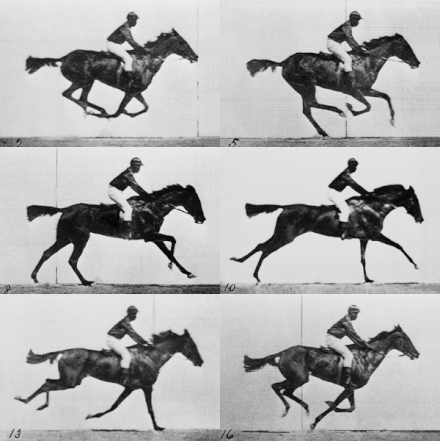
Galloping horse set to motion using photos by Eadweard Muybridge.
In 1877, Muybridge settled Stanford's question with a single photographic negative showing Stanford's Standardbred trotting horse Occident airborne at the trot. This negative was lost, but it survives through woodcuts made at the time. By 1878, spurred on by Stanford to expand the experiment, Muybridge had successfully photographed a horse in fast motion.[11]
Another series of photos taken at the Palo Alto Stock Farm in Stanford, California, is called Sallie Gardner at a Gallop or The Horse in Motion, and shows that the hooves do all leave the ground simultaneously — although not with the legs fully extended forward and back, as contemporary illustrators tended to imagine, but rather at the moment when all the hooves are tucked under the horse as it switches from "pulling" with the front legs to "pushing" with the back legs.[10] This series of photos stands as one of the earliest forms of videography.
Eventually, Muybridge and Stanford had a major falling-out concerning his research on equine locomotion. Stanford published a book The Horse in Motion which gave no credit to Muybridge despite containing his photos and his research, possibly because Muybridge lacked an established reputation in the scientific community. As a result of Muybridge's lack of credit for the work, the Royal Society withdrew an offer to fund his stop-motion photography. Muybridge subsequently filed a lawsuit against Stanford, but lost the dispute.[10]

Murder, acquittal and paternity

In 1874, still living in the San Francisco Bay Area, Muybridge discovered that his wife had a lover, a Major Harry Larkyns. On 17 October, he sought out Larkyns and said, "Good evening, Major, my name is Muybridge and here's the answer to the letter you sent my wife"; he then killed the Major with a gunshot.[12]
Muybridge was put on trial for murder. One aspect of his defense was a plea of insanity due to a head injury that Muybridge had sustained following his stagecoach accident. Friends testified that the accident dramatically changed Muybridge's personality from genial and pleasant to unstable and erratic. The jury dismissed the insanity plea, but he was acquitted for "justifiable homicide". The episode interrupted his horse photography experiment, but not his relationship with Stanford, who paid for his criminal defense.[13]
After the acquittal, Muybridge left the United States for a time to take photographs in Central America, returning in 1877. He had his son, Florado Helios Muybridge (nicknamed "Floddie" by friends), put in an orphanage. Muybridge believed Larkyns to be his son's true father, although as an adult, the son bore a remarkable resemblance to Muybridge. As an adult, Floddie worked as a ranch hand and gardener. In 1944 he was hit by a car in Sacramento and killed.[14]

Later work


American bison cantering – set to motion using photos by Eadweard Muybridge
Muybridge often travelled back to England, and on 13 March 1882 he lectured at the Royal Institution in London in front of a sell out audience that included members of the Royal Family, notably the future King Edward VII.[15] He displayed his photographs on screen and described the motion picture via his zoopraxiscope.[15]
At the University of Pennsylvania and the local zoo Muybridge used banks of cameras to photograph people and animals to study their movement. The models, either entirely nude or with very little clothing, were photographed in a variety of undertakings, ranging from boxing, to walking down stairs, to throwing water over one another and carrying buckets of water. Between 1883 and 1886 he made a total of 100,000 images, working under the auspices of the University of Pennsylvania. They were published as 781 plates comprising 20,000 of the photographs in a collection titled Animal Locomotion.[16] Muybridge's work stands near the beginning of the science of biomechanics and the mechanics of athletics.

A phenakistoscope disc by Muybridge (1893)

The phenakistoscope – a couple waltzing
Recent scholarship has pointed to the influence of Étienne-Jules Marey on Muybridge's later work. Muybridge visited Marey's studio in France and saw Marey's stop-motion studies before returning to the U.S. to further his own work in the same area. However, whereas Marey's scientific achievements in the realms of cardiology and aerodynamics (as well as pioneering work in photography and chronophotography) are indisputable, Muybridge's efforts were to some degree artistic rather than scientific. As Muybridge himself explained, in some of his published sequences he substituted images where exposures failed, in order to illustrate a representative movement (rather than producing a strictly scientific recording of a particular sequence).
Similar setups of carefully timed multiple cameras are used in modern special effects photography with the opposite goal of capturing changing camera angles with little or no movement of the subject. This is often dubbed "bullet time" photography.
At the Chicago 1893 World's Columbian Exposition, Muybridge gave a series of lectures on the Science of Animal Locomotion in the Zoopraxographical Hall, built specially for that purpose in the "Midway Plaisance" arm of the exposition. He used his zoopraxiscope to show his moving pictures to a paying public, making the Hall the very first commercial movie theater.[17]

Death

Eadweard Muybridge returned to his native England for good in 1894, published two further, popular books of his work, and died on 8 May 1904 in Kingston upon Thames while living at the home of his cousin Catherine Smith, Park View, 2 Liverpool Road. The house has a British Film Institute commemorative plaque on the outside wall which was unveiled in 2004.[18] Muybridge was cremated and his ashes interred at Woking in Surrey.

Legacy

Many of Muybridge's photographic sequences have been published since the 1950s as artists' reference books.[citation needed] Cartoon animators often use Muybridge's photos as a reference when drawing their characters. Since 1991, the company Optical Toys has published Muybridge sequences in the form of movie flipbooks.
Filmmaker Thom Andersen made a 1974 documentary titled Eadweard Muybridge, Zoopraxographer, describing his life and work.
Composer Philip Glass's 1982 opera The Photographer is based on Muybridge's murder trial, with a libretto including text from the court transcript. A promotional music video featured an excerpt of the opera dramatizing the murder and trial, and included a considerable number of Muybridge images.
The play Studies in Motion: The hauntings of Eadweard Muybridge debuted in 2006, a co-production between Vancouver's Electric Company Theatre and the University of British Columbia Theatre. While blending fiction with fact, it tells the story of Muybridge's obsession with cataloguing animal motion. The production started touring in 2010.
In 2007, Canadian poet Rob Winger wrote Muybridge's Horse: a poem in three phases, a long poem nominated for the Governor General's Award for Literature, Trillium Book Award for Poetry, and Ottawa Book Award. It documented his life and obsessions in a 'poetic-photographic' style. It won the CBC Literary Award for Poetry.
In 1985, the music video for Larry Gowan's single "(You're a) Strange Animal" prominently featured animation rotoscoped from Muybridge's work. In 1986, a galloping horse sequence was used in the background of the John Farnham music video for the song "Pressure Down". In 1993, the rock band U2 made a video of their song "Lemon" into a tribute to Muybridge's techniques. In 2004, the electronic music group The Crystal Method made a music video to their song "Born Too Slow" which was based on Muybridge's work, including a man walking in front of a background grid.
Kingston University in London, UK has a building named in recognition of Muybridge's work as one of Britain's most influential photographers.
In addition, Muybridge's work has influenced:

Exhibitions and collections

A collection of Muybridge's equipment, including his original biunial slide lantern[20] and Zoopraxiscope projector, can be viewed at the Kingston Museum in Kingston upon Thames, South West London. The University of Pennsylvania Archives in Philadelphia, Pennsylvania hold a large collection of Muybridge's photographs, equipment, and correspondence.[21]
In 1991, the Addison Gallery of American Art at Phillips Academy in Andover, Massachusetts hosted a major exhibition of Muybridge's work, which later traveled to other venues. A book-length exhibition catalogue was also published.[22] The Addison Gallery has significant holdings of Muybridge's photographic work.[23]
In 2000–2001, the Smithsonian Institution National Museum of American History presented the exhibition Freeze Frame: Eadweard Muybridge's Photography of Motion, plus an online virtual exhibit.[24]
From 10 April through 18 July 2010, the Corcoran Gallery of Art in Washington, D.C. mounted a major retrospective of Muybridge's work entitled Helios: Eadweard Muybridge in a Time of Change. The exhibit has received favorable reviews from major publications including The New York Times.[25]
An exhibition bringing together around 150 of Muybridge's works took place in autumn 2010 at the Tate Britain, Millbank, London.[26] An exhibition of important items bequeathed by Muybridge to his birthplace of Kingston upon Thames, entitled Muybridge Revolutions, opened at the Kingston Museum on 18 September 2010 (exactly a century since the first Muybridge exhibition at the Museum) and ran until 12 February 2011.[27]


from wikipedia.org

Twitter Delicious Facebook Digg Stumbleupon Favorites More

 
Design by Free WordPress Themes | Bloggerized by Lasantha - Premium Blogger Themes | Web Hosting Coupons